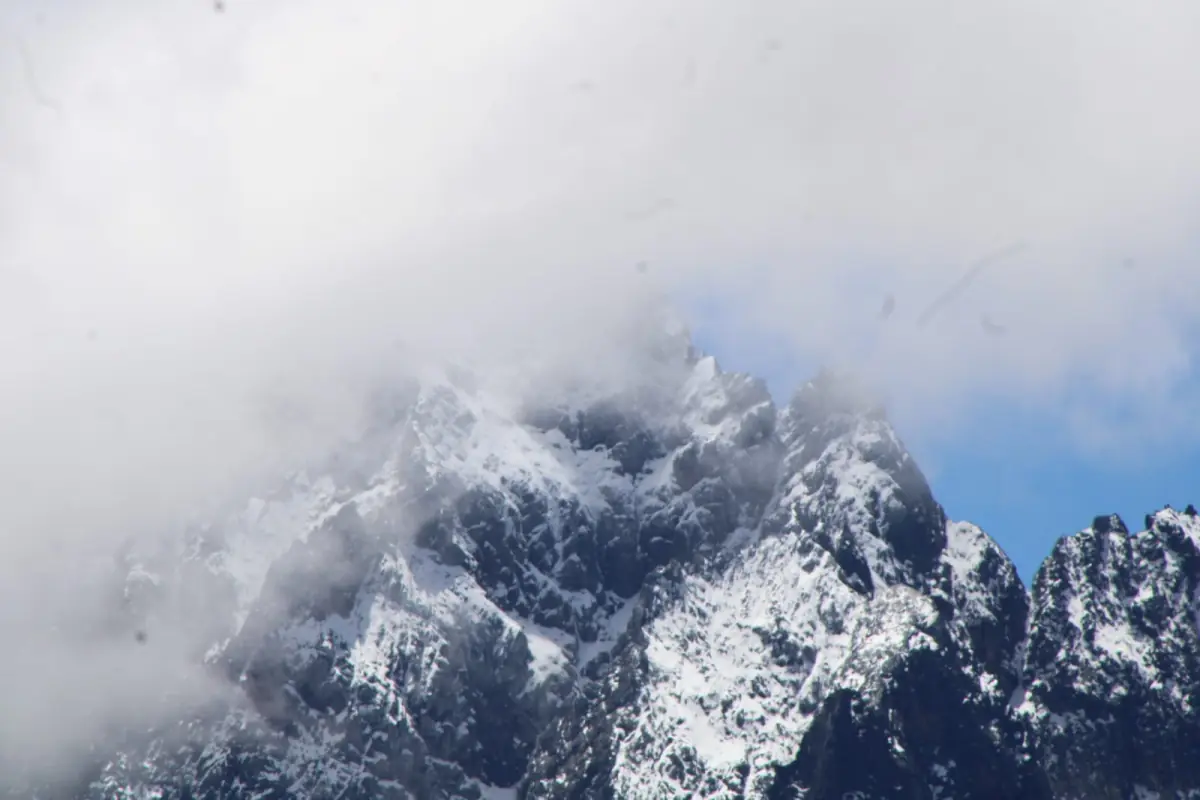
Mount Kenya weather in short
Mount Kenya weather follows two rainy seasons. Kenya's long rains fall from March to May and the short rains from October to December. That is the national pattern, not a promise that the other months stay dry on the mountain. Cloud builds around the peaks, and the moorland and rock zones feel nothing like the towns at the foot.
Walkers usually look at January, February, early March and August. Rock climbers pick the side of the massif by season. If you are still deciding on a route, start with our guide to Mount Kenya treks and come back here to match the dates.
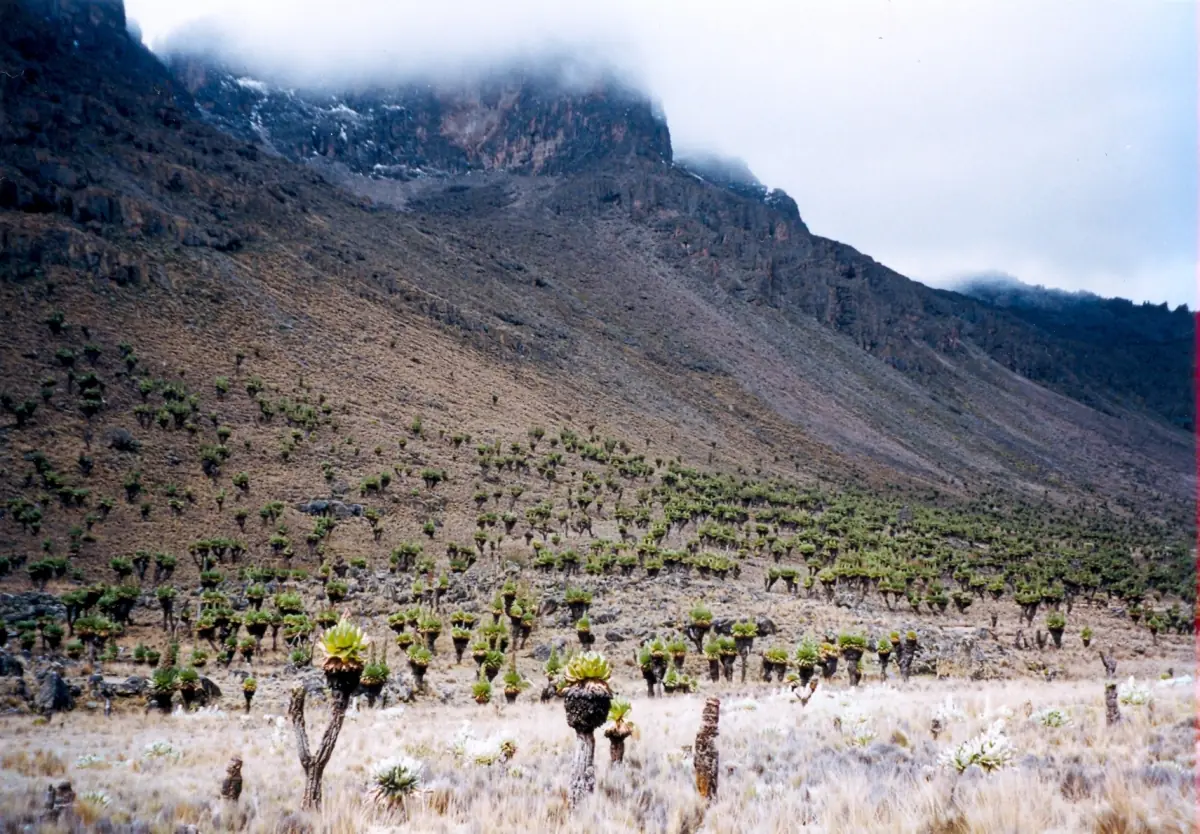
Rain and temperature at the foot of the mountain
Typical monthly figures for Meru, at 1,528 m on the lower slopes.
| Month | Daily high | Daily low | Rain |
|---|---|---|---|
| January | 23.4 °C | 13.9 °C | 57.5 mm |
| February | 23.7 °C | 13.6 °C | 56.7 mm |
| March | 24.1 °C | 16.5 °C | 117.3 mm |
| April | 23.7 °C | 15.3 °C | 312.1 mm |
| May | 22.5 °C | 15.5 °C | 243.6 mm |
| June | 21.2 °C | 14.5 °C | 55.1 mm |
| July | 20.3 °C | 14.0 °C | 71.1 mm |
| August | 22.0 °C | 14.4 °C | 71.0 mm |
| September | 23.7 °C | 13.5 °C | 54.1 mm |
| October | 24.9 °C | 14.6 °C | 256.2 mm |
| November | 22.1 °C | 14.8 °C | 296.2 mm |
| December | 22.3 °C | 13.9 °C | 117.2 mm |
April and November are the wettest months, and January, February, June and September the driest. These are town-level figures. They do not describe the summit, and you should not subtract a fixed number of degrees to guess the temperature at Point Lenana. Plan for cold nights and for rain or cloud at any time of year.
Our pick: a day trip that stays below the summit
This day trip walks to about 3,600 m and back, so you avoid the cold of a summit night. Mountain weather changes quickly, and no tour can promise clear views.
Hand-picked tours, booked through GetYourGuide. Prices are indicative starting prices in US dollars (as of October 2026). Tap a tour for live availability and the current price in your currency.
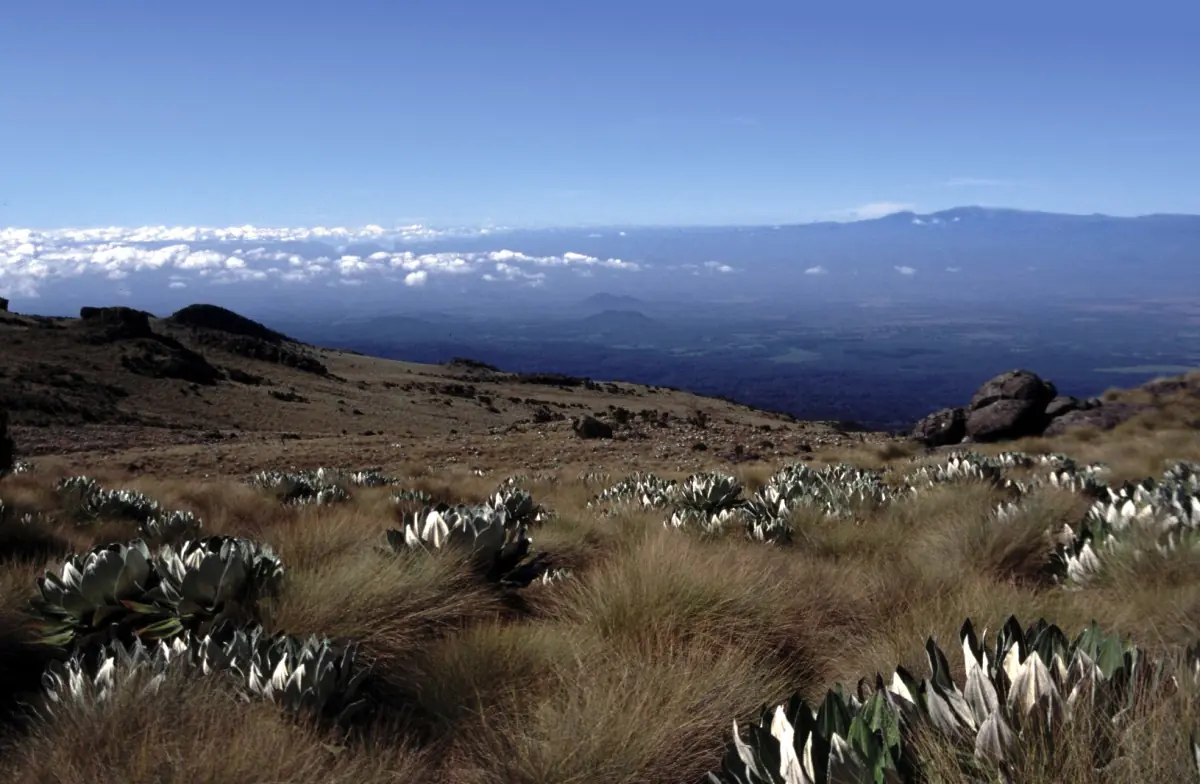
Mount Kenya treks through the seasons
Guided treks and day trips on Mount Kenya, with live prices and availability.
Best time to climb Mount Kenya
The answer depends on whether you walk to Point Lenana or climb a technical route.
| Goal | Good months | Good to know |
|---|---|---|
| Trekking to Point Lenana | January, February, early March, August | The long rains (March to May) and short rains (October to December) fall outside this window |
| Rock climbing, south side | Late December to mid-March | Technical climbing on Batian and Nelion, not a trek |
| Rock climbing, north side | Late June to mid-October | Includes some of the drier months at the foot of the mountain |
| Wet-season trip | April, May, November | Rain figures at the foot are highest, so paths and camps will be wetter |
For most trekkers, the best time to climb Mount Kenya is January or February, with August as the second window. If your dates are fixed and fall in a rainy month, the mountain is not closed, but you should expect wet ground, especially on boggy sections such as the Vertical Bog on the Naro Moru route.
Summit day and the daily weather cycle
Cloud and sun follow a pattern through the day, so the start time matters more than the month.
Start in the dark
A typical summit-day plan leaves Shipton's Camp around 03:00 to reach Point Lenana at sunrise, about 06:30. Sunrise times shift through the year, so treat this as an example, not a fixed schedule.
Point Lenana summit day →Cloud builds through the day
Measurements on the Lewis Glacier showed a pronounced daily cycle of cloud and radiation. Plan to be off the summit ridge before the weather turns, and keep time in reserve.
Mount Kenya glaciers →Frozen ground at the top
Summit day can mean frozen scree and a short scramble at the end, so pack warm layers, gloves and a head torch.
Compare the routes →Altitude matters as much as weather. Above 3,000 m, medical guidance advises sleeping no more than about 500 m higher each night. If you feel headache with nausea or dizziness after gaining height, do not go higher, and descend if it gets worse.
Keep planning
Pages that pair well with the weather calendar.
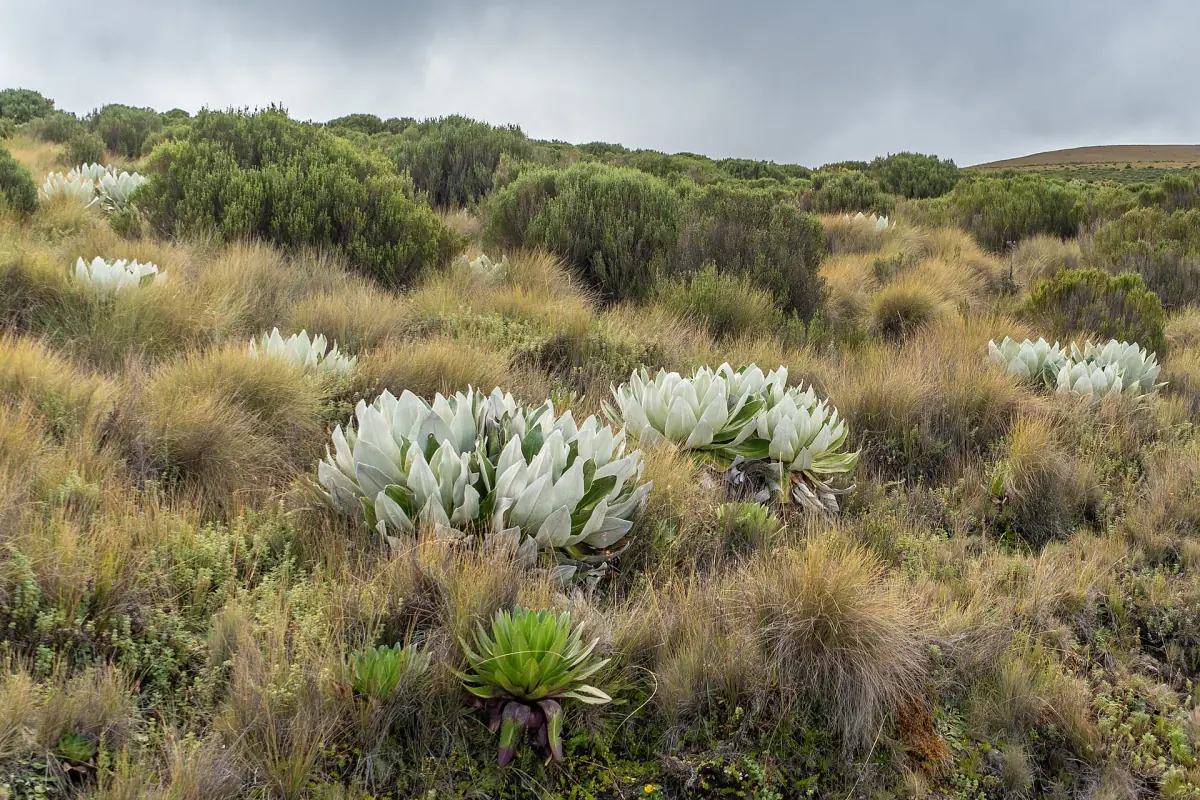

Mount Kenya weather: frequently asked questions
What is the best month to climb Mount Kenya?
January and February are the months walkers favour most, followed by early March and August. Rock climbers choose the south side from late December to mid-March and the north side from late June to mid-October. No month guarantees clear skies.
When are the rainy seasons?
Kenya's long rains run from March to May and the short rains from October to December. At Meru, on the lower slopes, April and November are the wettest months in the table above.
How cold is Point Lenana?
Summit temperatures vary a lot, so plan for freezing conditions. Summit day can include frozen scree. Pack warm layers, gloves, a hat and a head torch, and check a current forecast a few days before you go.
Can I climb in the rainy season?
The park is open, but paths are wetter and clouds are thicker. Bogs such as the Vertical Bog on the Naro Moru route are the sections most affected by rain. Ask your guide how the route looks before you commit.
When does summit day start?
Often around 03:00 from Shipton's Camp, with sunrise at the top about 06:30. Your own start time depends on your pace, the weather and your guide's advice.
How do I pay the park fee?
Payment is cashless, through KWSPay on eCitizen, M-Pesa, Visa or bank transfer. See the park fees page for the rates.